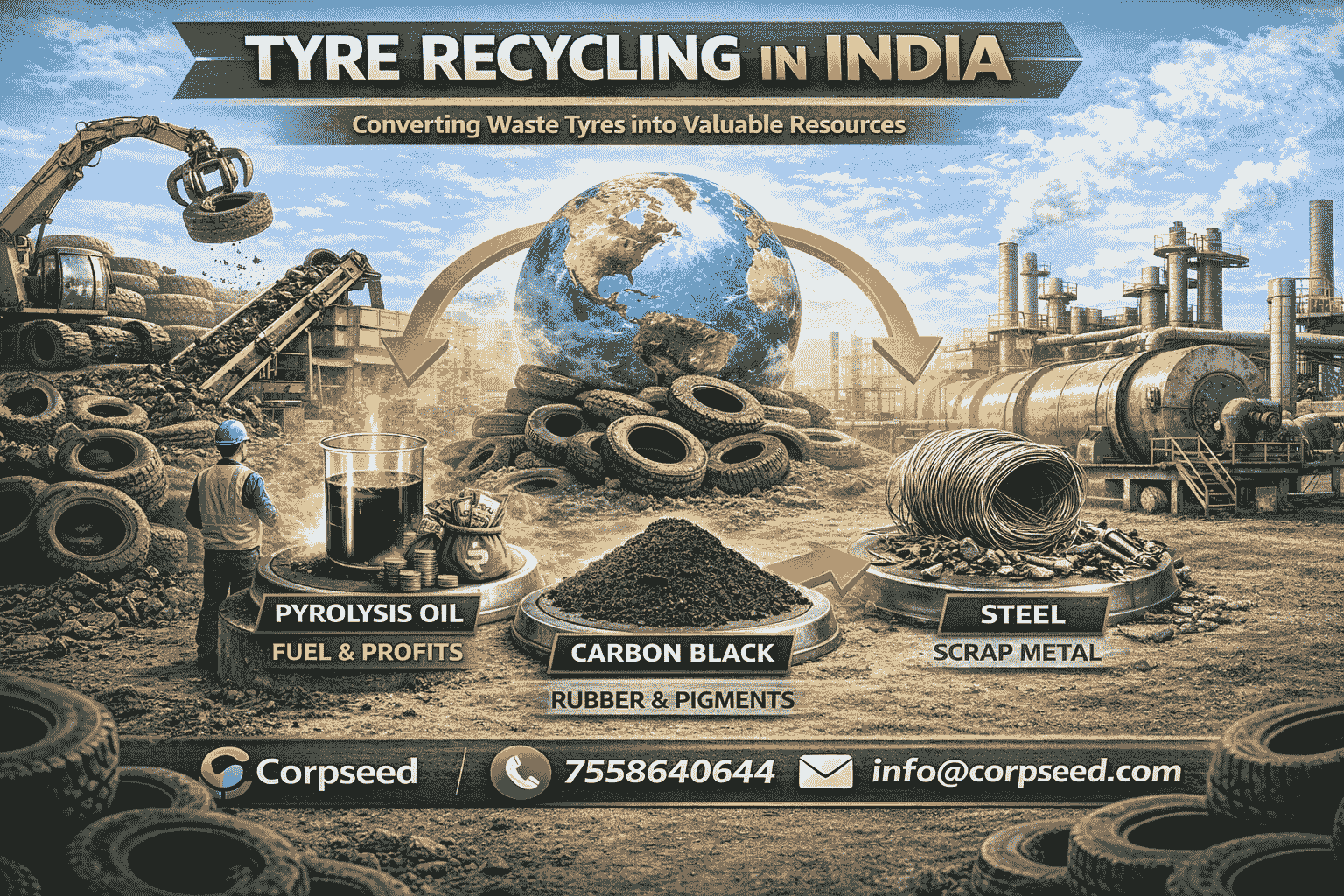
In India, the expanding tyre recycling industry can be attributed to the growth in vehicle population and strict regulations regarding the disposal of waste. Millions of waste tyres are tossed away every single year. Now businesses are opting to process these used tyres through a tyre recycling facility instead of sending them to the dump; this allows for the recovery of rubber, steel, and carbon black from used tyres.
If you're thinking about opening a tyre recycling company, this article will provide you with a guide on establishing the company, the necessary legal approvals, and the business potential in India.
What Is Tyre Recycling?
Tyre recycling refers to the process of converting used or scrap tyres into reusable materials. Used tyre recycling facilities utilize equipment to shred, separate, and process used tyres into several different products, such as:
Crumb rubber
Reclaimed rubber
Steel wire
Rubber powder
Pyrolysis oil (depending on the design)
The above products are commonly used for a variety of applications (e.g., road paving, playground surfaces, tile manufacture, etc.).
Why Should I Start A Tyre Recycling Company In India?
India produces a significant number of waste tyres every year. The introduction of Extended Producer Responsibility (EPR) regulations and Central Pollution Control Board (CPCB) Guidelines mandates that licensed tyre recyclers will be necessary in the near future, therefore creating a need for licensed tyre recyclers. Rubber recycling is an industry that is very well positioned for future growth based on these factors.
Key Reasons:
Increasing availability of scrap tyres
Demand for recycled rubber is very strong
Government emphasis on circular economy
Rubber powder has export potential
A tyre recycling plant that has been properly permitted can function both as a profitable business and environmentally responsible activity.
Types of Tyre Recycling Plants
1. Mechanical Tyre Recycling Plant
This type of waste tyre recycling plant disassembles tyres physically into small chips and granules.
Output:
Rubber granules
Steel scrap
Fibre
It is most suitable for companies aiming at markets for rubber powder and crumb rubber.
2. Pyrolysis-Based Tyre Recycling Plant
The process involves heating the tyre in the absence of oxygen.
Output:
Pyrolysis oil
Carbon black
Steel wire
Gas (used as fuel)
Environmental clearance is very crucial for this type of plant to be set up and run.
Licenses Required for Tyre Recycling Plant in India
Launching a tyre recycling business entails meeting environmental and pollution regulations.
Essential Approvals:
Company Registration
Consent to Establish (CTE)
Consent to Operate (CTO)
Pollution Control Board authorization
EPR Registration (if applicable)
Factory license
Fire NOC
Cost of Setting Up a Tyre Recycling Plant in India
Overall, cost of setting up a tyre recycling plant will vary depending on:
The type of machinery used — for example, rubber powder or crumb rubber can both be created, but will use different machines;
The amount of land and infrastructure required, which are additional costs;
The amount of pollution control systems needed, which will again depend on how much raw material will be used in production (i.e. recycled tyre materials = > pollution = > pollution control = > more cost).
Overall, a small to medium waste tyre recycling plant setup can be done for ₹50–70 lakhs, while a large scale automatic plant would use a few crores worth of machinery.
How Do the Tyre Recycling Companies in India Make a Profit?
Recycle companies in India make their revenue from:
Selling rubber granules / crumb rubber
Selling steel scrap
Supplying A to B for construction project
Pyrolytic oil (if they are using it)
Exporting the rubber granules
Partnering with tyre manufacturers / scrap dealers to use their products as a consistent raw material source
Market Potential for Tyre Recyclers in India
There is a strong demand for the sale of recycled rubber from the tyre recyclers in India in the following sectors:
Infrastructure
Sports flooring
Automotive
Rubber products
Using the proper tyre waste recycling process is part of the Emergency Requirements report to comply with EPR (Extended Producers Responsibility).
How To Get Started With A Tyre Recycling Business In India
To start your own tyre recycling company in India will include completing these steps:
Research the market
Determine the type of tire recycling plant to run — mechanical v/s pyrolysis
Locate a site in an industrial area
Purchase machinery
Get your pollution control approvals
Install pollution control systems
Start polishing up your operation
Consulting assistance will help a lot to expedite any submitted proposal for obtaining approval/installation of your tyre recycling plant and have proper installation setup and process as well.
Difficulties in Recycling Waste Tyres Are Applicable to a Company
Laws and Regulations
High Start Up Cost
Random Fluctuations of Scrap Tyre Prices
Choosing the Right Equipment
Developing the Correct Business Model With Legal Assistance Will Diminish Your Risk.
Frequently Asked Questions About The Tyre Recycling Industry
Is The Recycling Of Waste Tyres A Viable Business Opportunity In India?
Yes, A Well Planned And Compliant Facility Will Produce Consistent Returns On The Investment Due To The Increase Demand For Recycled Rubber And Steel.
What Is A Tyre Recycling Facility Cost In India?
It Depends On The Size Of The Facility And The Types Of Machines Used. A Small Yard Recycling Facility Can Cost Approximately Rs50 Lakh, While Larger Yards Require More Investment Capital.
Does A Tyre Recycling Facility In India Require Pollution Control Approval?
Yes, All Recycling Facilities Require Government Approval From A Pollution Control Board For Both Establishing And Operating A Facility.
What Products Can Be Manufactured From Waste Tyre Recycling?
Rubber Granules, Crumb Rubber, Steel Shards, Carbon Black And Pyrolysis Oil.
How Long Will It Take To Open A Tyre Recycling Facility In India?
Most Of The Time, If All Of Your Documentation Is Complete, The Time To Get Permission To Start Your Facility Will Vary Somewhere Between 2 And 4 Months Depending Upon Your State's Regulations.
Conclusion
In conclusion, the tyre recycling industry in India holds a bright future because of the combination of government regulations and people's growing awareness of environmental issues. Establishing a tyre recycling plant which conforms to the Indian regulations is not an easy task and involves proper planning, investment and obtaining the necessary approvals.
Treading the right path, a waste tyre recycling plant can morph tyre waste recycling into a green and profitable business venture.
On top of that, if you are going to start a tyre recycling business, make sure that you comply with the laws and pick a plant structure that will allow your business to grow continually.

Write a comment ...